First Friday Interview at Galatea

First Friday Interview at Galatea

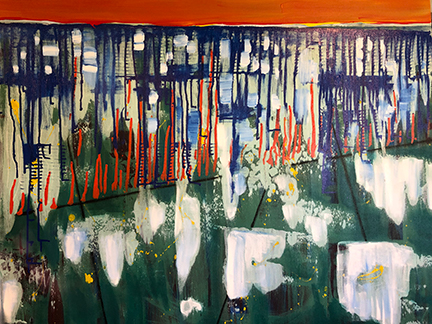
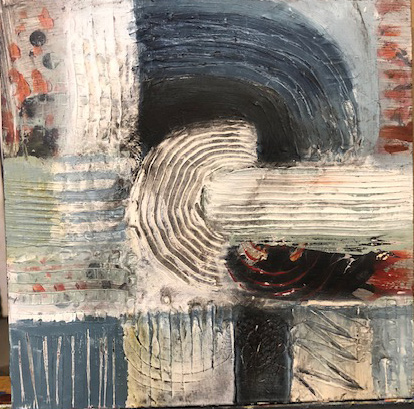
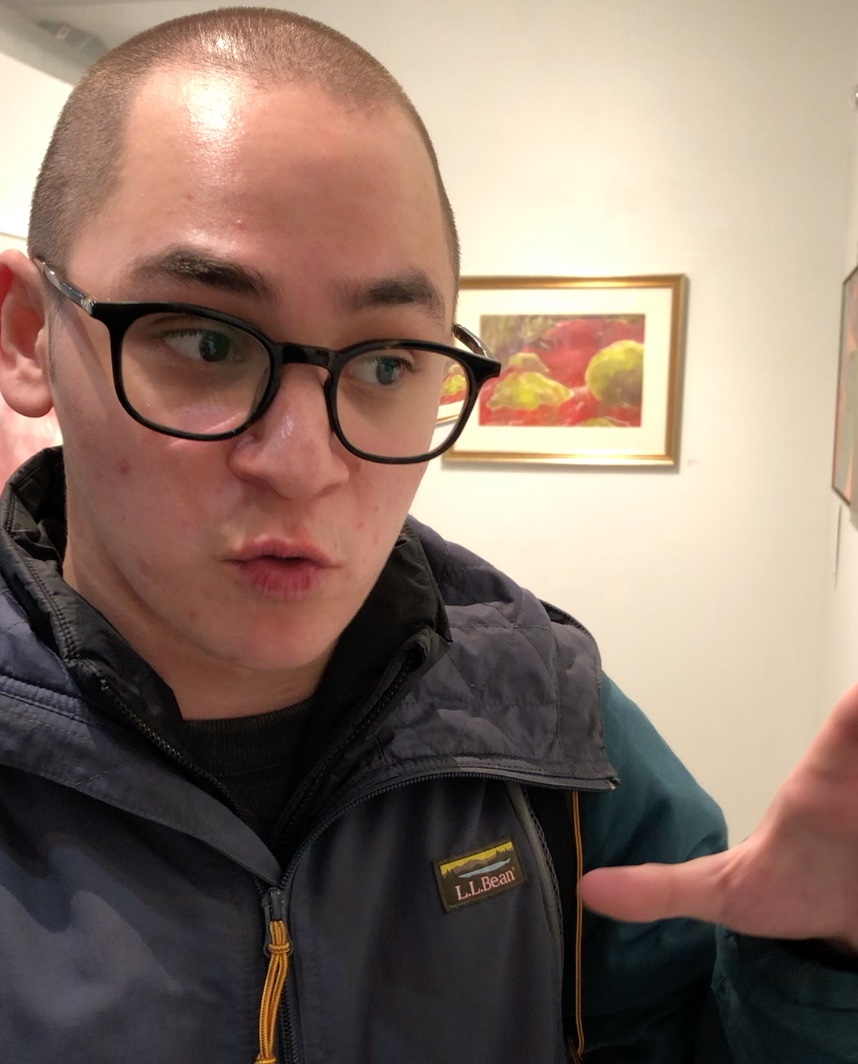
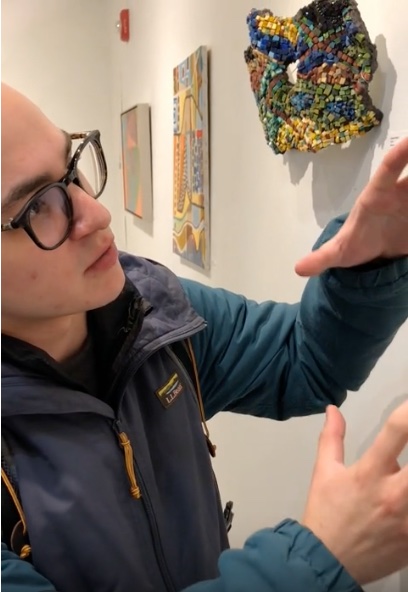
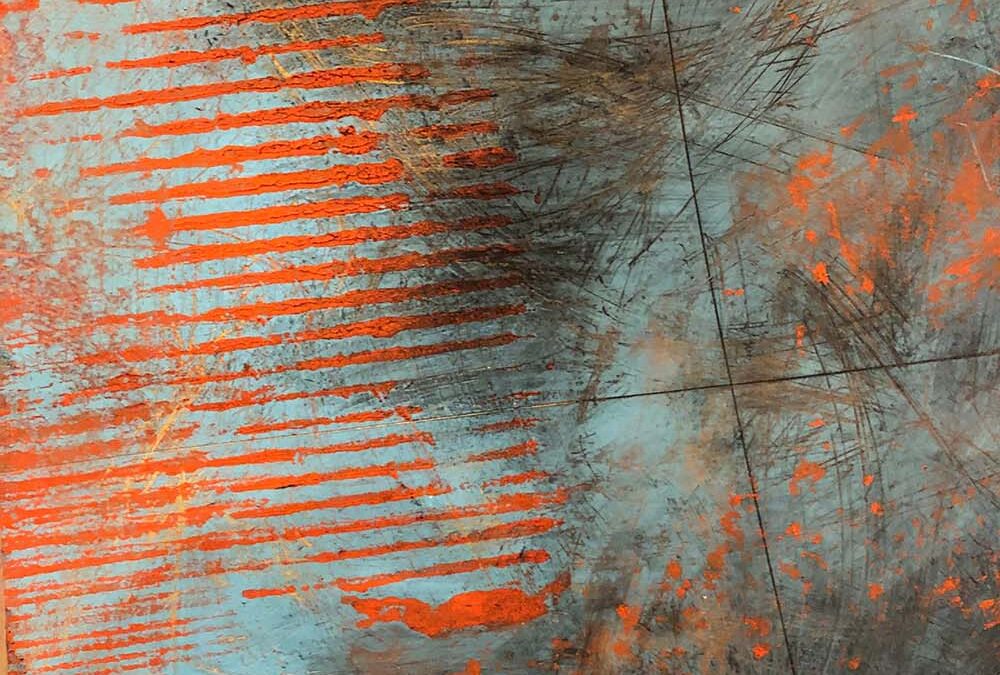
I spoke to Jonathan Gold who recently graduated from Berkeley School of Music in composing. He was very thoughtful and articulate in describing the painting I had at Galatea. We found that the creative process of painting and compoing had a lot in common. (Video below).

JONATHAN:  “I am extremely drawn to the balance between softness and stasis as well as like a kind of violence with the scratching texture. It’s very evocative unlike a lot of representational art. That’s why I love Expressionism so much.”

“It forces a deeper and more personal response as I’m forced to take it in and react to it and then try to put it all together. Pieces like this draw me in. There’s an ineffability about it. But it’s beautiful, subtle, but bold. It’s hard to do that.”

DEB: “And you relate to it in this way,  because of what you do with your music?”

JONATHAN: “Yeah, I’m a composer of avant garde music, minimalistic music, but music that puts the listener into, I would say, a meditative state. It’s  a state that’s sort of paralysis and forces us into a listening position versus a reactive position. You know, the world around us and everything around us keeps changing, but we’re forced to stop. And I do that through very slow rates of change, as well as striking dissonance.”

(Back to painting) “There’s something very striking about this.  I think there’s a level of dissonance. But also a level of harmony. I love the way it’s sectioned off. There are pieces that absolutely fit together versus like an unobstructed, undivided, undifferentiated form field of color like you might find in other paintings.”

“Lots and lots of just beautiful texture and dimensionality too, which is important. I think we want to capture complexity, the complexity of life, complexity of our experience. And it’s impossible to do that if you don’t have a great deal of dimensionality to your work, in my opinion.”

“I think this is, to me, successful. You can see all this nuance, this scratches and different colors and combinations of colors are revealed underneath, and there’s darkness, and there’s light, and I love the way that those things interact. And then there’s a a splash of bold…  I’m not going to call it neon.  which is also subtly represented here in a smaller section. I love that a lot.”

DEB: “That’s really great. That really helps me. Thank you so much for commenting.  A lot of it is not intentional, but a subconscious expression.”

JONATHAN: “When people hear my work and they say, “I love how this happened”, and it made me feel this way. I didn’t mean for any of that to happen. But, that’s inherent to the complexity of our expression or our emotion. We don’t even understand it. It just sort of happens. The spontaneity of it is, to me, magical.”

DEB: “And a bit of serendipity.”

JONATHAN: “Absolutely.”

DEB: “I start off with a very simple layer and build upon layer upon layer but it’s not finished. And I keep adding layers and removing parts that I don’t like that don’t work. I take that off. And this can take hours until you’re like, “that’s it”.”

JONATHAN: “Right… “That’s it. I’m done.” And it’s great when we reach that point. You know, I’ve had pieces where I build up these huge structures, these, and then I tear them down. build them back up and sometimes you put everything out there and you exactly you whittle away until it’s just the right balance and combination of everything you’ve already put on there and as you said there’s an additive and subtractive element that to me is is true balance. Some people don’t know when to stop. They just put everything there and then, that’s it.”

DEB: “That’s an interesting connection that you’ve made between art and design.

JONATHAN: “Yeah, I’m very  inspired by art, especially abstract art. It’s more exciting, it’s more expressive to me. It’s a great piece.

DEB: “There will be more coming! Thank you.”

JONATHAN: “Of course!”
First Friday, First Show at Galatea, 2023

First Friday, First Show at Galatea, 2023

My painting, “Abstract #10”, will be in Galatea Fine Art Gallery opening on First Friday, November 3, from 5 pm to 9 pm. The small exhibit is called “Color Theory” and features a few Galatea group artists. Galatea Fine Arts is online at galateafineart.com and is located at 560 Harrison Avenue. First Friday is a SoWa event every first Friday of the month. All galleries and shops are open and it is widely attended. There are some nice restaurants/pubs around the area, so you can make a nice evening of shopping, viewing and dining. I’ll be there!

Three Painting Styles Developing in the Studio

Three Painting Styles Developing in the Studio

Over the last few weeks I have working on three different series of paintings ongoing in the studio. Find these three styles on the Latest Work page. I’ve separated them out so its easier to see the three styles.

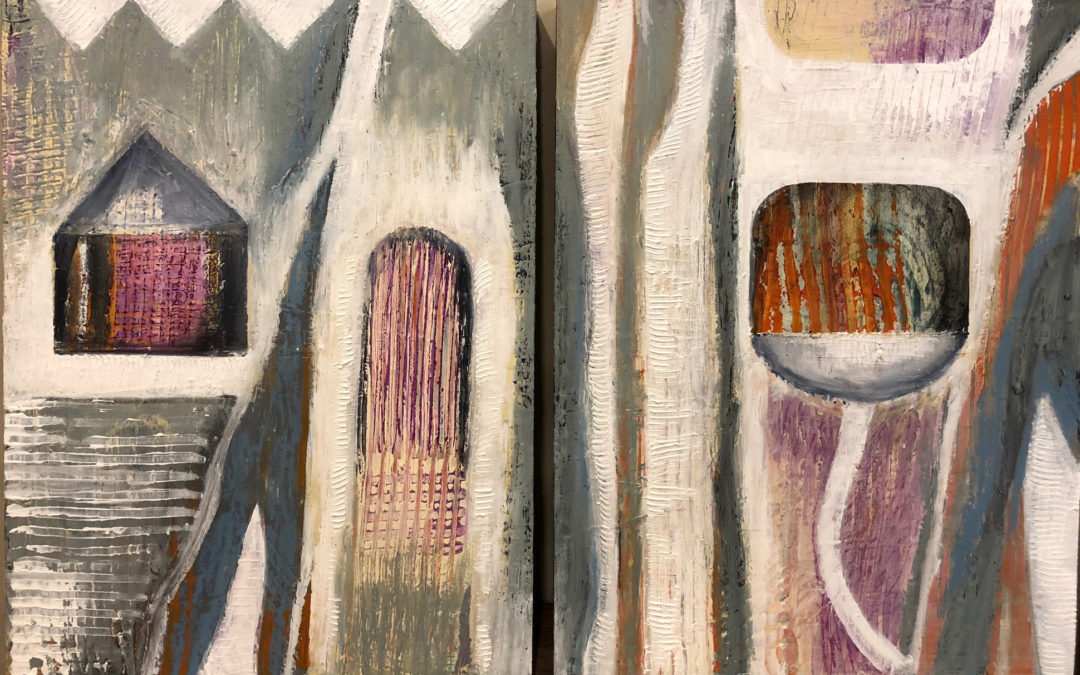
The first is the Cold Wax method of painting, which has been on hold for the moment. I plan to revive this style either before or during a trip to Mexico with well known cold wax painter Jerry McLaughlin in October. These paintings are on the small side due to using a substrate of wood panels, which can be heavy. Some painters use museum quality heavy paper which then has to be glued to wood.

The second is the curvilinear series of large paintings using acrylic and mixed media. I have about five made, two of which have been sold. These paintings are inspired by the work of Claire B. Cotts, who I have been following and actually viewed her work in Santa Fe this past November. See comment on these paintings by noted arts writer John Koch in the REVIEW/BIO page.

Lastly, Inspired by the drip technique of Nicholas Wilton, I have been experimenting with acrylic on larger canvases. I have three done and another in the making. These are thrilling to make because you don’t know what you will come up with each time. Similar to what Gerhardt Richter says in the Netflix movie, you just react and keep going until it looks done.

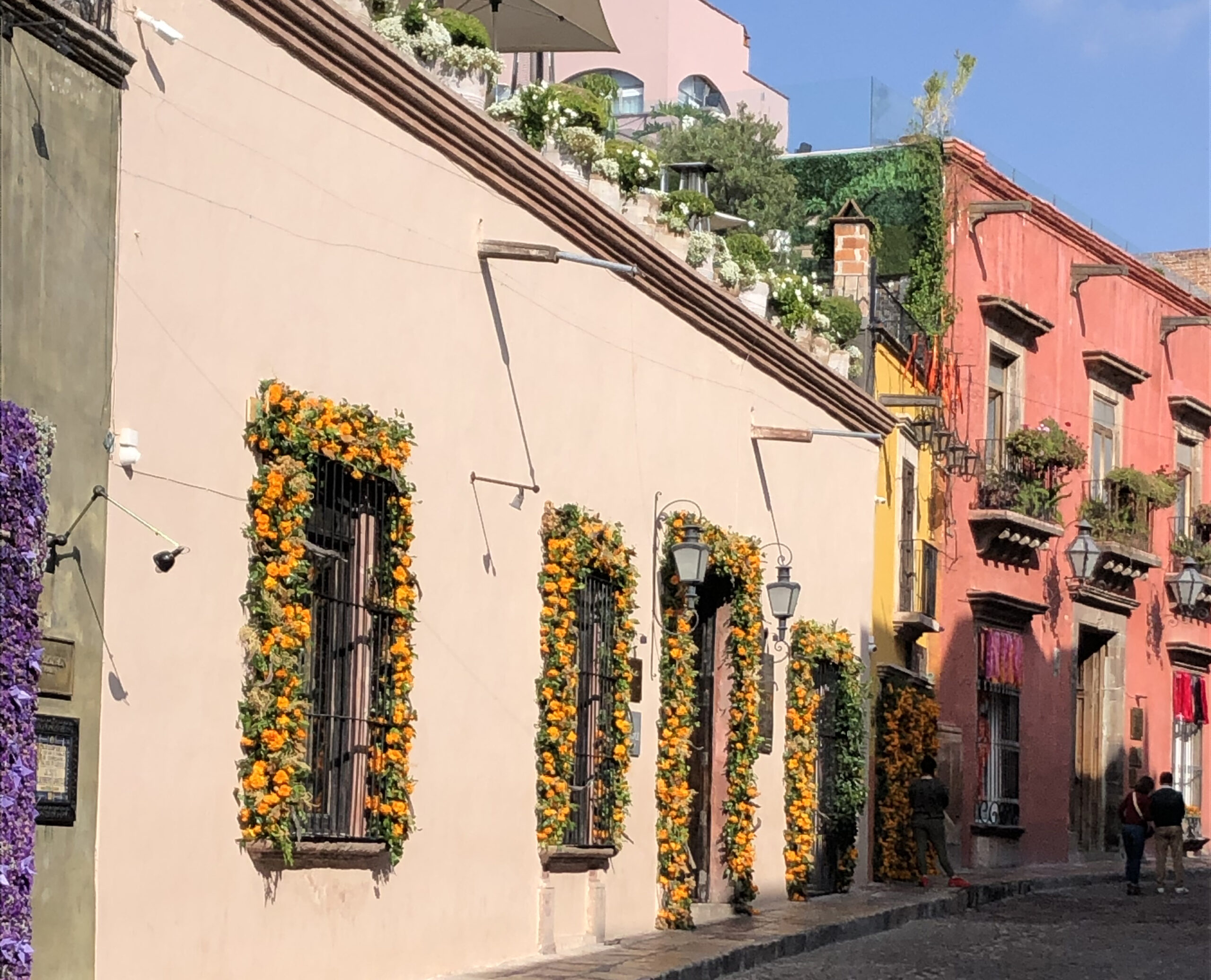
San Miguel de Allende, Mexico, a haven for artists

San Miguel de Allende, Mexico, a haven for artists

I’ve made plans to travel to San Miguel de Allende in October for a 5 day workshop with Jerry McLaughln, master of cold wax media painting. (https://www.jerryscoldwaxworkshops.com/) Yes, I’m looking forward to getting up at the crack of dawn, stumbling out to the breakfast room for coffee and breakfast made by cheerful Senoritas and hurrying to catch the bus to the studio. In the evening. I’ll ramble around this artsy town full of galleries, artisan shops and restaurants. Maybe I can meet up with my friend Genevieve for a hike at dusk. Such bliss!

Ex Pats are all over the place. Even Jerry, who several years ago organized his first class there, decided to move to this small town three weeks later. He’s renovated a studio for his classes and opening a work residency for artists this fall.

I’m taking the beginning class because I have been going my own way with cold wax since 2019. There is a lot more technique to learn and I hope to be able to apply that to larger boards when I return. For more on what cold wax is, see my previous post here.

Cold Wax Medium and Oil Explained

Cold Wax Medium and Oil Explained

A number of newer paintings on Perugi Studio are described as Cold Wax & Oil. What is this new (or not so new) painting method? It is a product by Gamblin (and others) made with mostly beeswax and some solvent. When the artist adds oil paint in a ratio of 1 part paint to 3 parts wax, it becomes a spreadable mixture that is easy to use and less expensive than oil alone. Other advantages are its’ luminosity, butter consistancy, and short drying time. It can be textured with tools and layered which is useful for making abstract paintings. Because it is primarily made of wax, it can only be applied to cradle board or other hard surfaces. (Arches oil paper can also be used if it is adhered to a board later.)  The mixture can be collaged with paper and other materials. Other innovations include adding marble dust, sand, pastel powders, etc.

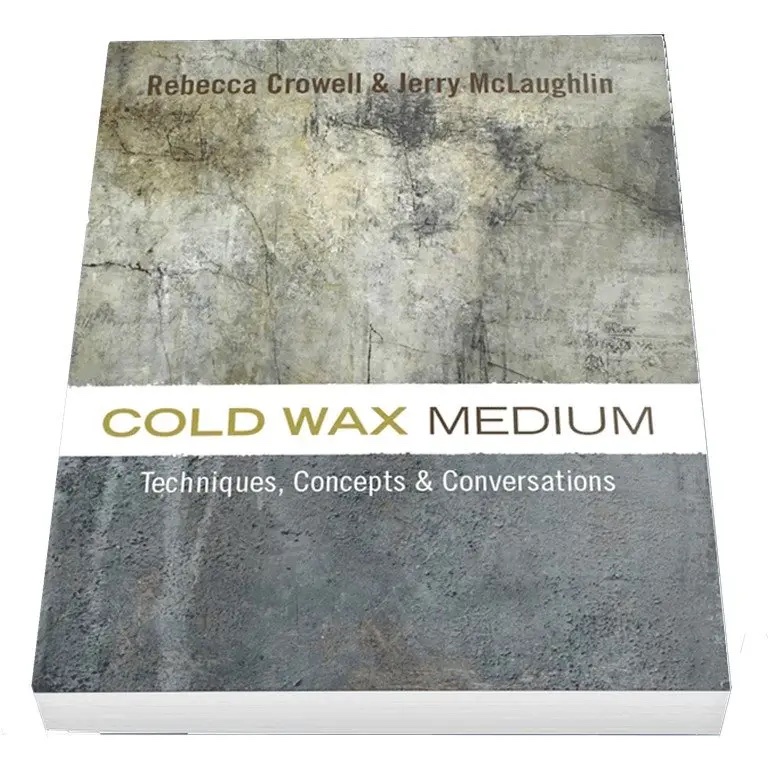
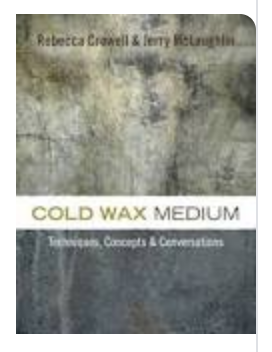
Cold was was introduced in the 30’s as an alternative to hot wax or encaustics. Encaustics involve heating pots that can be dangerous. Cold wax has become more popular in the last few years because of its ease of use, versatiliy and accessibility. And it was reintroduced by the cold wax Bible  “Cold Wax Medium: Techniques, Concepts & Conversations” by Rebecca Crowell & Jerry McLaughlin, now in its third printing. It can be purchased at the website ColdWaxAcademy.com.

Intimacy and Power

Nicholas Wilton recently spoke with artist Nadine Renazile, and she shared something about painting with scale that confirmed his creative experience, but never thought through to put into words.

“Small, tiny paintings need to feel powerful and large paintings need to feel intimate.”

See the video interview here: https://www.art2life.com/2020/07/26/the-intimacy-of-scale/

I’m sharing three small paintings I did in a series before the Black Lives Matter interrupted into a national crisis. I was thinking about slavery and maybe it was Black Lives month, and reports of police abuse were beginning to be being aired. So I did this. Only when the first two were made did I recognize what I had made. The third one was begun and I saw a skull. The series came into being. Serendipity but also an artist will to communicate a thought. So I think this is a good example of tiny paintings that feel powerful.

The paintings below describe the experience of an African Slave in America.  From left to right: A Way In as a slave via a ship, The Hiding Place while fleeing slavery, and finally Death of a Slave.